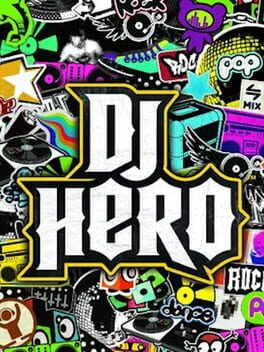
DJ Hero primarily simulates turntablism, a musical style used by disc jockeys to create a new mashup song by incorporating one or more previously recorded songs played on record players along with sound effect generators. The game features score attack gameplay similar to the Guitar Hero games. The controller consists of a wireless deck consisting of a movable turntable that supports 3 "stream" buttons, an effects dial, a crossfader, and a "Euphoria" button; a hidden panel contains additional controller buttons to interact with the gaming console outside of the game. A portion of the controller can be detached and reattached to adapt the unit for left-handed players. Notes travel in an arc across a spinning record on screen, and the player holds down one of the 3 stream buttons to play notes; two buttons reflect the two songs used in that particular mix, and the third represents samples to add to the mix which can be adjusted with the effects dial. The player must also constantly adjust the crossfader to match onscreen symbols, which alters the relative volume of the songs as to bring one song to the forefront of the mix for a short time. Certain tracks are shown on screen as a series of up or down arrow, representing scratching sections, requiring the player to turn the turntable in the direction of the arrows while holding down the button to score points, mimicking the scratching of the record needle on vinyl albums. "Euphoria" is equivalent to Guitar Hero's Star Power, collected by successfully completing specific phrases in the song mix, called Perfect Regions, and can be released by pressing the Euphoria button, doubling the player's current multiplier as well as automatic crossfading when active. There is also a "Rewind" meter that builds through consistent successful playing, and once full, allows the player to rewind the song to fix errors in their performance. The player must continue to perform well or their performance meter will drop and the music track will cut out. Failing the song is not possible, unlike in Guitar Hero games. A single player career mode is available, as well both competitive and cooperative multiplayer modes ("DJ vs DJ"), playable locally or remotely. Ten songs have been specially mixed to also support gameplay with Guitar Hero and other compatible guitar controllers in a "DJ vs Guitar" mode. Players can also use a microphone for a non-scoring addition to the mix. A Party Play mode allows the game to automatically play the songs with the ability for a player to jump in and play at any time.
Pro Evolution Soccer 5 (abbreviated PES 5), known as World Soccer: Winning Eleven 9 in Japan and North America (sometimes mislabeled as World Soccer Winning Eleven 9 International), is a 2005 football sports simulation video game developed and produced by Konami as part of the Pro Evolution Soccer series.
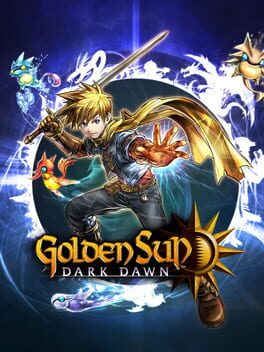
After going dark six years ago, 2010 will see a new dawn. Golden Sun DS updates the popular portable Golden Sun role-playing series with an impressive graphical style. This installment follows the story of the previous heroes' descendants and immerses players into the magic of its adventure by pushing the boundaries of intuitive touch-screen controls.
Grandia is a role-playing video game developed by Game Arts and published by Entertainment Software Publishing for the Sega Saturn console as the first game in their Grandia series. Initially released in Japan in 1997, the game was later ported to the PlayStation in 1999, with an English version of the game appearing on the platform in North America in the following September by Sony Computer Entertainment America, and later in Europe in March 2000 by Ubisoft. The game was produced by much of the same staff who worked on the company's previous role-playing endeavor, the Lunar series, including producer Yoichi Miyagi and music composer Noriyuki Iwadare. Since its release, Grandia has become notable for its combat mechanics, which have been carried over to future games within the franchise, and has spawned two spin-off titles – Grandia: Digital Museum and Grandia: Parallel Trippers – both released exclusively in Japan. In celebration of the announcement of renewing development on Grandia Online, which acts as a prequel to Grandia, the game was re-released on Sony's PlayStation Network platform in Japan as a downloadable title in April 2009 and in North America on February 25, 2010. It was re-released in Europe on November 10, 2010.
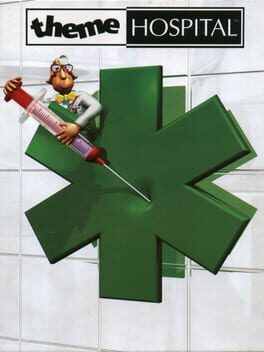
The PlayStation port of Theme Hospital has a a different menu system to accomodate the controller, and a slightly different graphical presentation of the HUD.
Brothers in Arms Earned in Blood adds new features and game modes and builds upon the elements that made Brothers in Arms Road to Hill 30 a runaway success. Featuring a new single player narrative, new multiplayer missions, an all-new cooperative style game mode, and new weapons and vehicles.
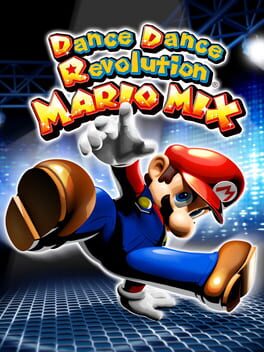
Boogie down with Mario in his own dance party. Players shake their things to more than 25 dance-flavored songs, from classic Nintendo themes to familiar favorites. With five difficulty levels, dancers of all abilities will be able to get into the groove. The special "Workout" feature tracks the calories burned while playing. Someone has stolen the Music Keys and released the music they held. Without the Music Keys, the unstable power of the music is wreaking havoc on the land. Mario must recover them before the chaos destroys the entire Mushroom Kingdom! The path to the keys is simple: Left, Right, Up, Down, Right, Down ...Characters include Mario, Luigi, Toad, Waluigi, Wario, Bowser. Players clear levels by performing the correct steps. Once they clear all the levels in a particular world, they'll collect a Music Key. Collect all the Music Keys to win. Players control Dance Dance Revolution: Mario Mix by stepping on different arrows on the Action Pad (included with game). Players can finally experience the thrill of stomping Goombas and other enemies firsthand. As players clear songs, they will unlock more songs, minigames and difficulty levels.
SingStar Country is a karaoke game, honouring the country music. The game gives points which are distributed by the purity of singing, as in how well does one manage to stay on tune. It doesn't matter if you change octaves in the middle of the song or what words are you singing in (it doesn't have a word recognition), so your singing is rated by how well you manage to hit the correct note at the correct time.
The Shoot, known in Japan as Shooting Studio, is a rail shooter which uses the PlayStation Move controllers. The premise of the game involves participating in the filming of action movies; instead of the usual lives the player character's attempts to succeed are measured by "takes". The player-controlled B-Movie star shoots his way through multiple themed sets, filled with cardboard enemies and obviously fake environments. The game features five movies, all spoofing different movie genres, such as Horror and Westerns. Throughout these movies the protagonist is tasked with defeating enemies, freeing the civilians and putting on the best possible performance by activating motion-based power-ups. The player can shoot into the floor to send out a shockwave to vanquish all enemies on the screen. It is also possible to spin on the spot to slow down time and get a more accurate shot. Shooting into the sky activates Rampage, a powerful machine gun.
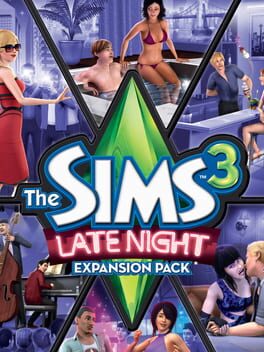
For the first time ever, your Sims can experience late night fun as a VIP in The Sims 3: Late Night. Get your Sims an all-access pass to the hottest spots in town. Whether they mingle with celebrities or enjoy a casual night with friends, your Sims' social lives are getting a boost! But keep in mind that some scenes are more exclusive than others, so make sure your Sims have the right connections to get past the bouncers at the hottest clubs. Wherever your Sims go, they'll discover new things to become - adored celebrities, all-night partiers, rowdy bandmates, or vampires. What will your Sims get up to after dark?
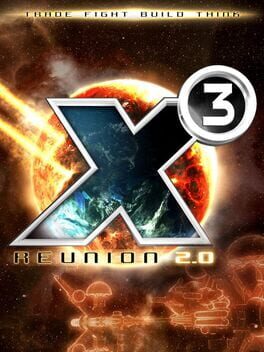
The Sequel to the award winning X2: The Threat introduces a new 3D engine as well as a new story, new ships and a new gameplay to greatly increase the variety in the X-universe. The economy of X3: Reunion is more complex than anything seen in the X-universe before. Factories are being built by NPCs, wars can affect the global economy, NPCs can trade freely and pirates behave far more realistically. Space just got a whole lot bigger with the addition of two new sectors and the introduction of the gargantuan Player HQ which allows many exciting new features including the ability to build your own ships and even give them customized space paint finishes. In addition to the new M7 battleship, there is an assortment of new weapons and onboard ship devices to use and explore.
High School Musical 3: Senior Year DANCE lets fans experience the energy, fun, and music of all three "High School Musical" movies. Players can dance to the beat of favorite "High School Musical" songs in familiar movie locations alongside their favorite characters.
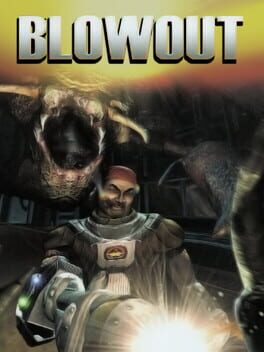
As Major John "Dutch" Cane, you'll lead an elite platoon of mercenary commandos, outfitted with the most deadly experimental weaponry, into the pit of evil. It's your job to rid the world of mutated beasts and alien insects through 10 levels of intense action. To ensure your team's success, the military has given you access to a variety of weapons, including a 20mm pump-action shotgun, eight-meter flamethrower, plasma rifle, machine gun, and an eight-inch nailgun. Blast through walls, ceilings, and floors to discover secrets and power-ups that enhance your weapons.
Years before the beginning of Hakuouki, the Shinsengumi was known as the Mibu Roushigumi. A wandering young man named Ibuki Ryuunosuke falls in with the group by chance just after they first come to Kyoto, and while grudgingly making friends with the members within, witnesses the dawning era of the Shinsengumi.
Stella Deus is a story-driven tactical role-playing game in which the player controls a group of characters both picked up during the course of the story and in side events. The world is navigated using an overworld map using point-to-point navigation, with a date system showing the length of time it takes to get to a selected location. Alongside the story missions, Towns can be visited, in which characters can customize and create new weapons and armor, sell existing equipment in exchange for money, and shop for items such as healing potions. In camps set up on a journey, characters can swap out weapons and armor, equip items such as healing potions and beneficial charms for future battles. Special items used in character leveling can also be crafted by the player. Alongside story-based missions, there is a special dungeon called the Catacomb of Trials, where characters can battle and gain experience levels, raising their general statistics. The number of available levels in the Catacomb increases as players progress through the game. Each character has a specific character class, which they keep throughout the game and continue to level up as they gain experience points (XP). Higher amounts of XP are awarded for executing special abilities. Along with swordsmen and archers, there are alchemists (mages), priests (healers), and units who fight using most things from axes to fists. Most battles are triggered based on story events, and are completed when the stated object has been accomplished by the player, be it defeating all enemies, defeating a boss, or performing a specific task. At the end of each battle, the players gain a summery of their performance and spoils gained. The game uses the turn-based Replaceable Action Position battle system, much of which was carried over from the battle system used in Hoshigami: Ruining Blue Earth. Players navigate the field across a grid-based map, which can include obstacles such as bodies of water and high structures. Character positioning within the environment can be used to their advantage, such as an archer gaining higher accuracy when at a high point in the level. Character actions are arranged in a set order, and each character's weapon dictates their attack range. Each time a character performs an action, they gain experience points and additional Skill Points (SP) that can be used to purchase supplies or raise individual character stats. Three types of Skills can be equipped for characters: Action Skills, a special attack that player execute for a certain amount of Magic Points (MP); Support Skills, which grant passive abilities such as scaling higher obstacles; and Zone Skills, which grant passive abilities to both the equipped character and those in close proximity to them. Alongside Action Skills, two or more characters in conjunction trigger unique special moves called Team Attacks. The amount of damage done depends on how many characters took part in the action. Team attacks also increase the rewards gained at the end of battles. Characters' actions are governed by their stored Action Points (AP): a character's turn begins when their AP meter is at 100. A character's actions can continue until the meter reaches 0, meaning that they can move and attack multiple times within their turn. The amount of AP used with each action depends on the weight of the armor the character is wearing.
A port for the PlayStation 2 in 2004, with several improvements and new characters.
The Modern version of the game has Mario working in a cookie factory. Yoshi and Toad are featured instead of the drivers, with Yoshi eating the Yoshi Cookies made on the left conveyor belt and Toad packaging the Yoshi Cookies made on the right conveyor belt. Boos also occasionally appear, taking up cookie dough slots on the second floor. Unlike in Classic Mode, however, Mario is allowed to fall down onto an elevator platform, but touching the very bottom or top still earns the player a miss. When Mario amasses 200, 500, and 700 points, a heart appears for him to remove a miss. Music is also featured in this version, with the tempo changing depending on the speed of the game.
Midnight Club: Los Angeles is an open-world racing game developed by Rockstar San Diego and published by Rockstar Games. Set in a recreation of Los Angeles, the game lets players take part in street races, time trials, and freeway battles while earning money and reputation to unlock vehicles, upgrades, and customization options. The game features licensed cars and motorcycles, with performance tuning and visual modification systems. Its open-world structure lets players drive through the city without loading separate tracks, using streets, traffic, and shortcuts as part of each race. The Complete Edition includes the main game and all the DLCs.
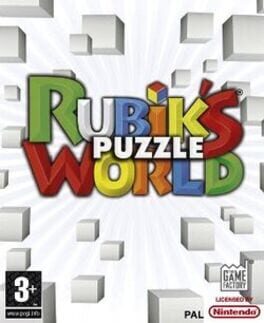
Step inside the mysterious “27th part” of the Rubik's cube - and discover a world of Rubik's themed puzzles to tease and challenge the whole family. Welcome to Rubik's World - an abstract environment populated by “Cubies” which make up the game's DNA. Rubik's World takes the shape, functionality and concept behind the famous Rubik's Cube but twists and turns the rules to transform it into a unique Puzzle filled game experience for players of all ages. Get ready for a collection of games infused with the mental challenges which made the original Rubik's Cube such a hit! The construction of the games will challenge your brain, enable you to solve increasingly difficult puzzles, and develop your logical capabilities – while having lots of fun! So take a trip inside the Rubik's Cube and enter an abstract world of Rubik's themed puzzles - each as addictive as the original cube we know and love! Features • Play 8 unique games which mix puzzles, quizzes, music and sound activities – as well as the classic cube solving game! • Multiplayer games allowing you to share the fun with family and friends. Compare your stats and progress, share environments, music compositions and more! • Each game requires forward thinking and involves complex mechanics but a simple interface – all based on the idea that every reaction can have multiple reactions • Expand your Rubik’s universe. The better you play, the more cubies come to life, unlocking new challenges and activities • Compose your own music. Hear your music being played by cubies in different places of the game! • See and hear your very own creations in the Rubik's universe.
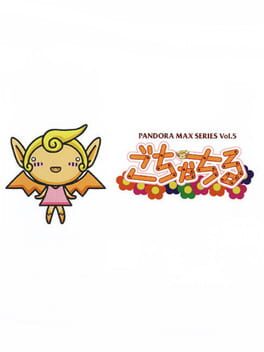
Pandora Max Series Vol. 5: Gochachiru is an Adventure game developed and published by Pandora Box, which was released in Japan in 2000.
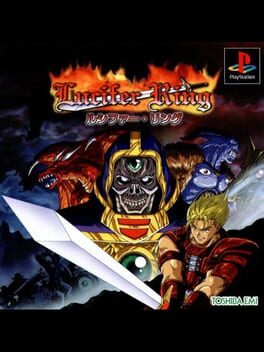
You play as a young hero named Nash who is tasked with stopping a dark wizard from using the Lucifer Rings that will open the gates of Hell. Naturally, Nash will have to hack and slash his way through Centaurs, Goblins, Dragons and creatures named Bob to put a stop to the evil forces. There will be mini-bosses and multi-state level bosses to round out this adventure to put our hero to the test. Dark wizards never let heroes get any rest, do they?